Form vs Shape - How painters see
This lesson is about how to see like a painter.
#1: The Mindset Shift

Traditional Painting principles establishes principles that you can use to paint, design and modify your “style” however you like. Now it is not about the technique, but about the mindset, that you use to create your paintings. In Traditional Painting it isn´t only about technique, but about a way of thinking. And that way of thinking can be applied to Digital Painting as well. I call it the “Shape Mindset”, (you can also call it Direct Painting or Alla Prima Painting, if you want to use the proper term(not meaning wet-into-wet but the mindset behind it)).
Here are common problems when not employing the “Shape Mindset”:
- Muddy colors
- No sense of light
- Bad form lighting
- Random composition
- No sense for Shape Design
- Chaotic rendering approach
Let´s dive a bit deeper.
#2: Touch
For starters, the biggest problem is our default drawing mode: our affinity to the Touch sensation. You might be great at drawing. Naturally, we all started with the pencil. But when you start using Photoshop or painting, you feel uncomfortable. Or you don´t know how to approach Oil Painting and Watercolor. The reason? We are associating what we see with a sense of touch. This is the method of drawing, that was developed in Western Art History. The sense of touch was first important to us for survival. If we were to develop a sense of depth we needed to connect the sense of touch with what we SEE. Or else we wouldn´t have a sense of space. So for a beginning artist, this connection of -Form- with -Sight- makes us more inclined with drawing form rather than using masses and shapes as a means of drawing. This sense of touch was already found already in Egyptian Art, which is the foundation of Western Art. You can see how the Egyptian Drawing below is equivalent to us going with our fingers along the contours of our face and body. This is all connected to the sense of touch.
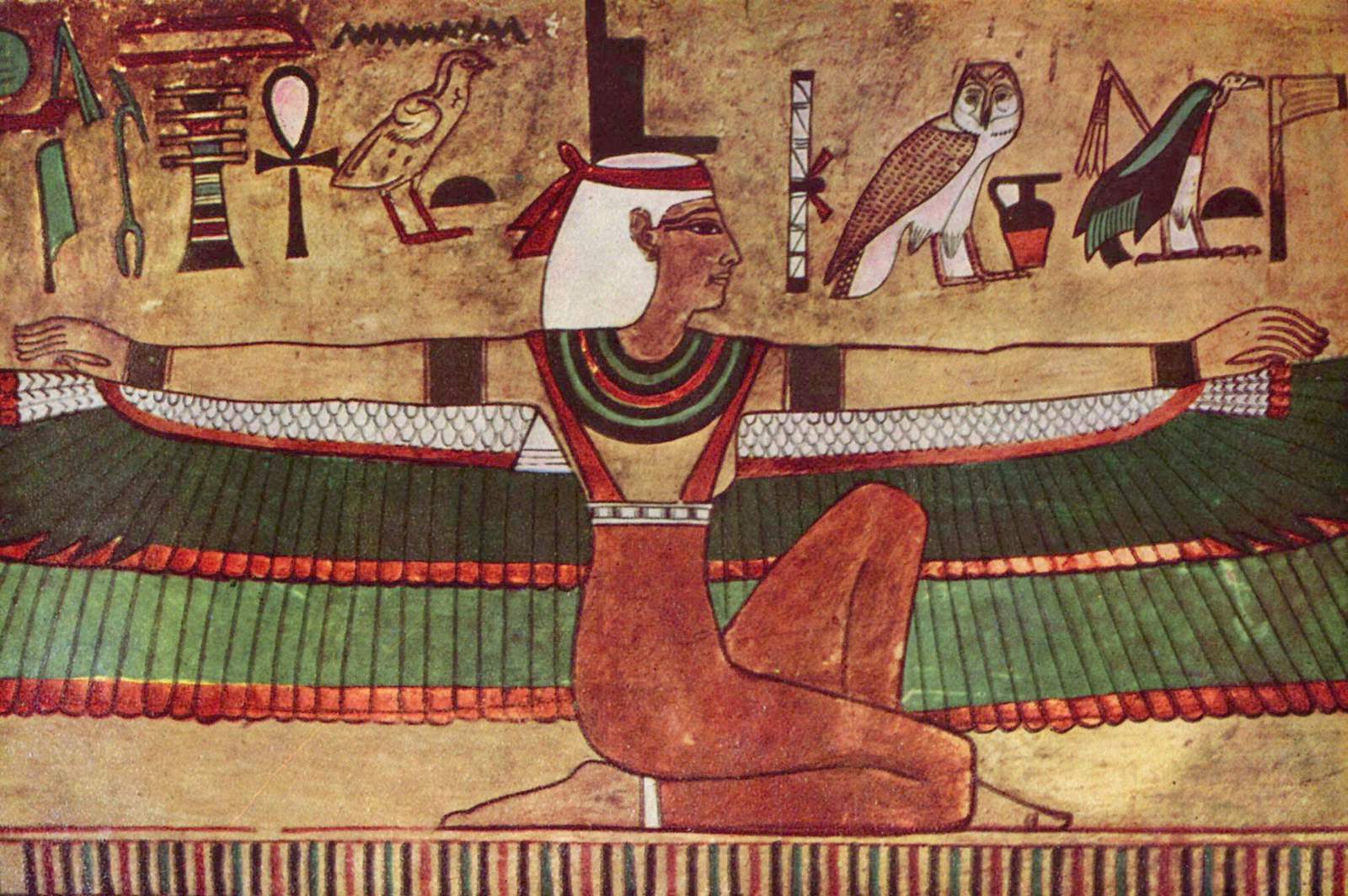
Egyptian Painting – 1360 B.C.
This sense of touch was pushed to near perfection in the Renaissance. Below we have a fuller representation of Form, which was the natural progression of Western Art. Michelangelo was a Master of Forms. Notice how to use overlaps and hatching to convey the 3-dimensionality of form. There is absolutely no sense for “true” values and “true” colors. Again, Forms are very conceptional, because it is something we feel, instead of really seeing it with our vision.
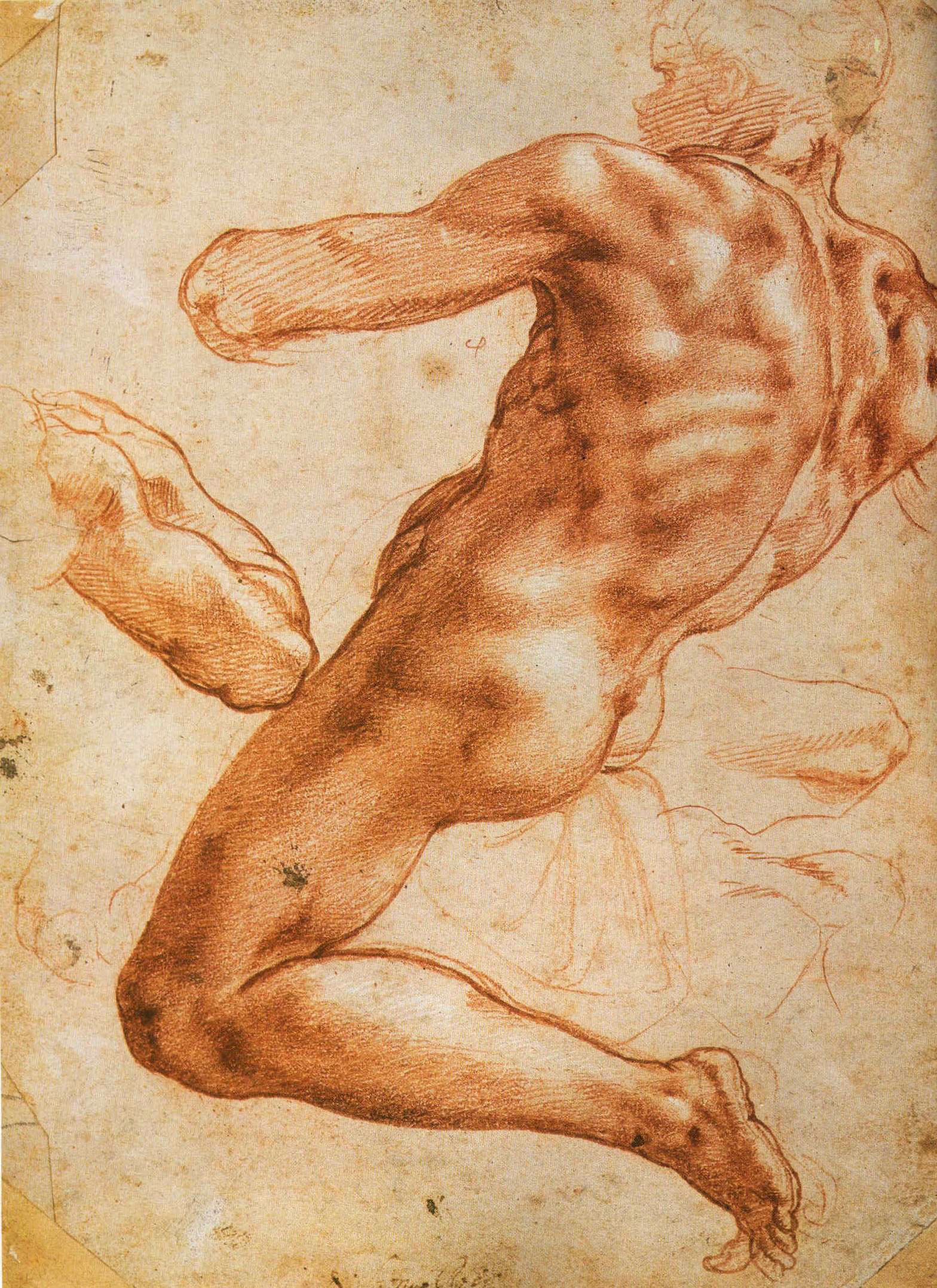
Michelangelo – Study for an ignudo
Linear Perspective and Space are all provinces of Forms. You probably already study perspective and this concept is not new to you.
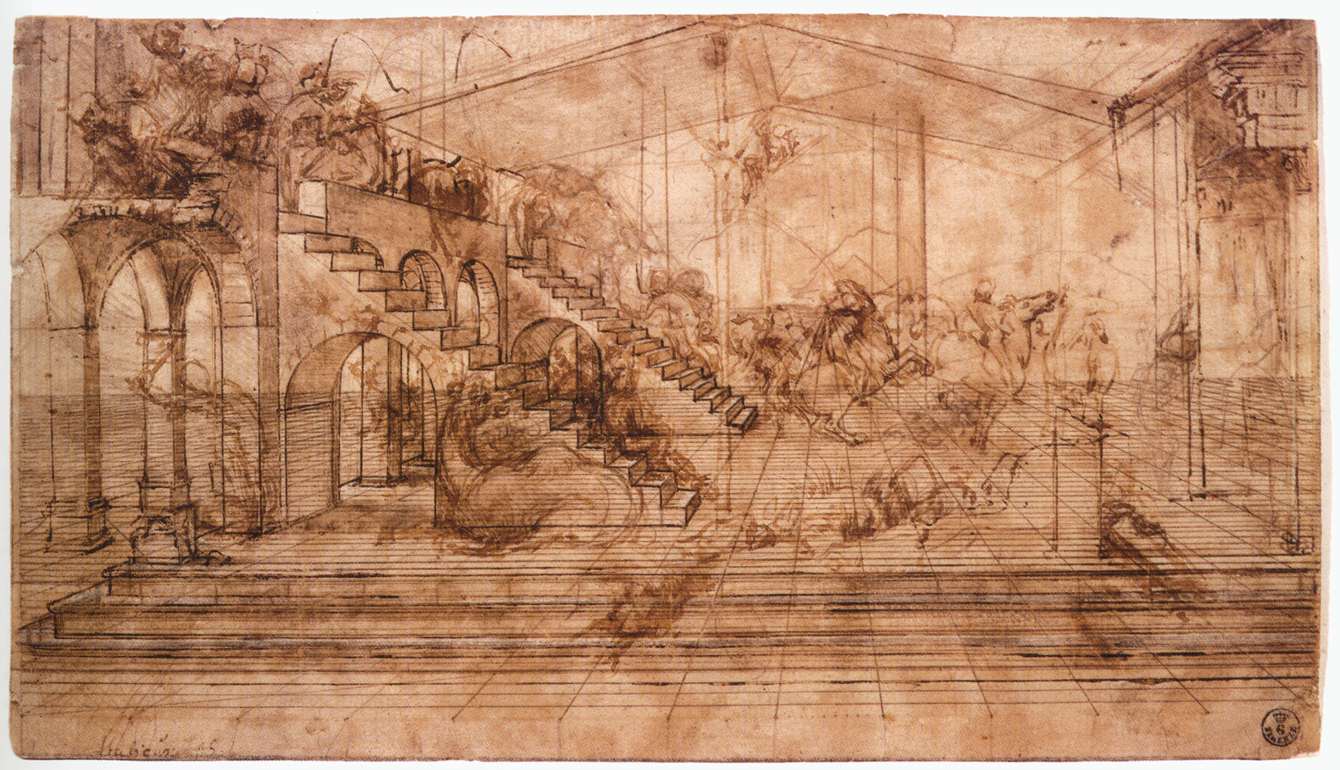
Leonardo Da Vinci – Perspective Study of the Adoration of the Magi
All of this can be drawn from imagination because the feeling for Forms always stays the same, no matter from what direction we “touch” it. When thinking about Forms, our skill level is depended on our knowledge of these Forms and the representation in Space, which is why the study of Anatomy, Structure and Perspective is so important. Ingres followed through with the idea of Form in later centuries. He was one of the greatest when looking at it´s beauty and he pushed it to almost perfection.
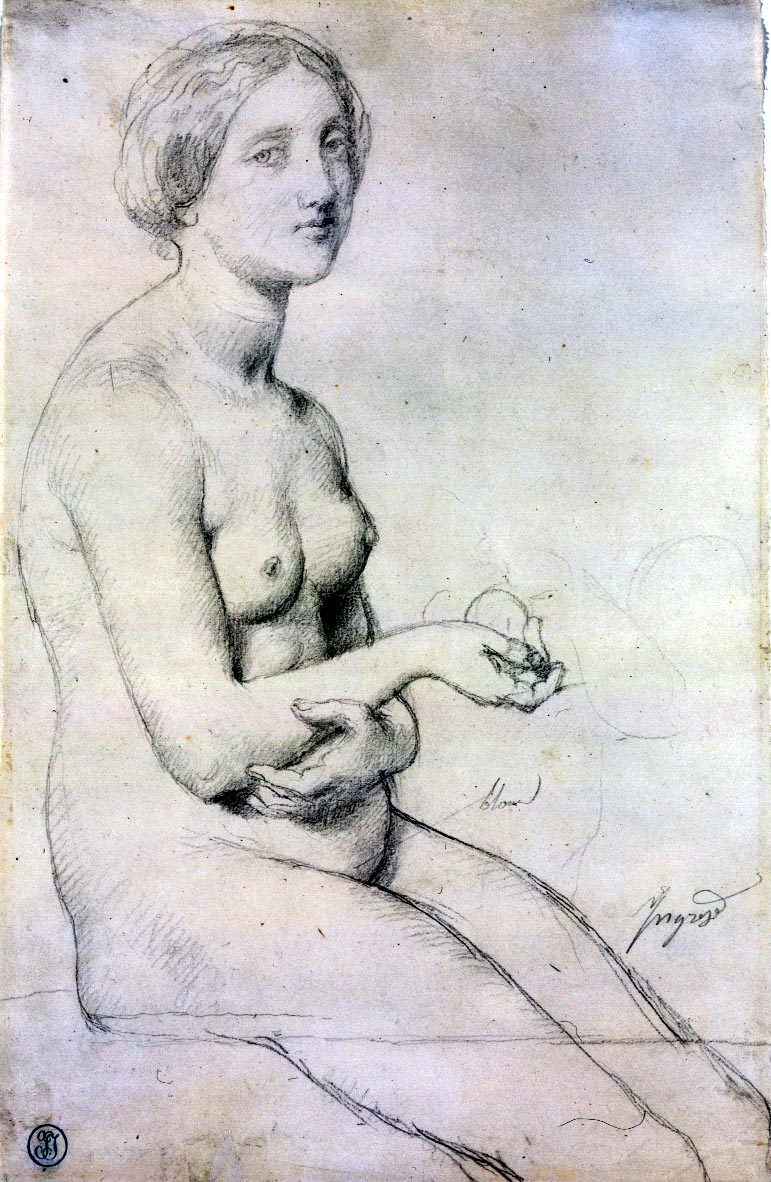
Jean-Auguste-Dominique Ingres – Etude Venus a Paphos(1852); As seen in this drawing, shape and color, which are connected to Vision, are completely neglected, and the whole drawing is ONLY associated with the sense of touch
Below you can see the perfect rendering of forms and materials(also by Ingres). This is masterful craftsmanship; almost all illustrators strive to be able to paint like that. But still, there is practically no sense of light and color(only sense of form), which is why we need to go further a bit in the next section.
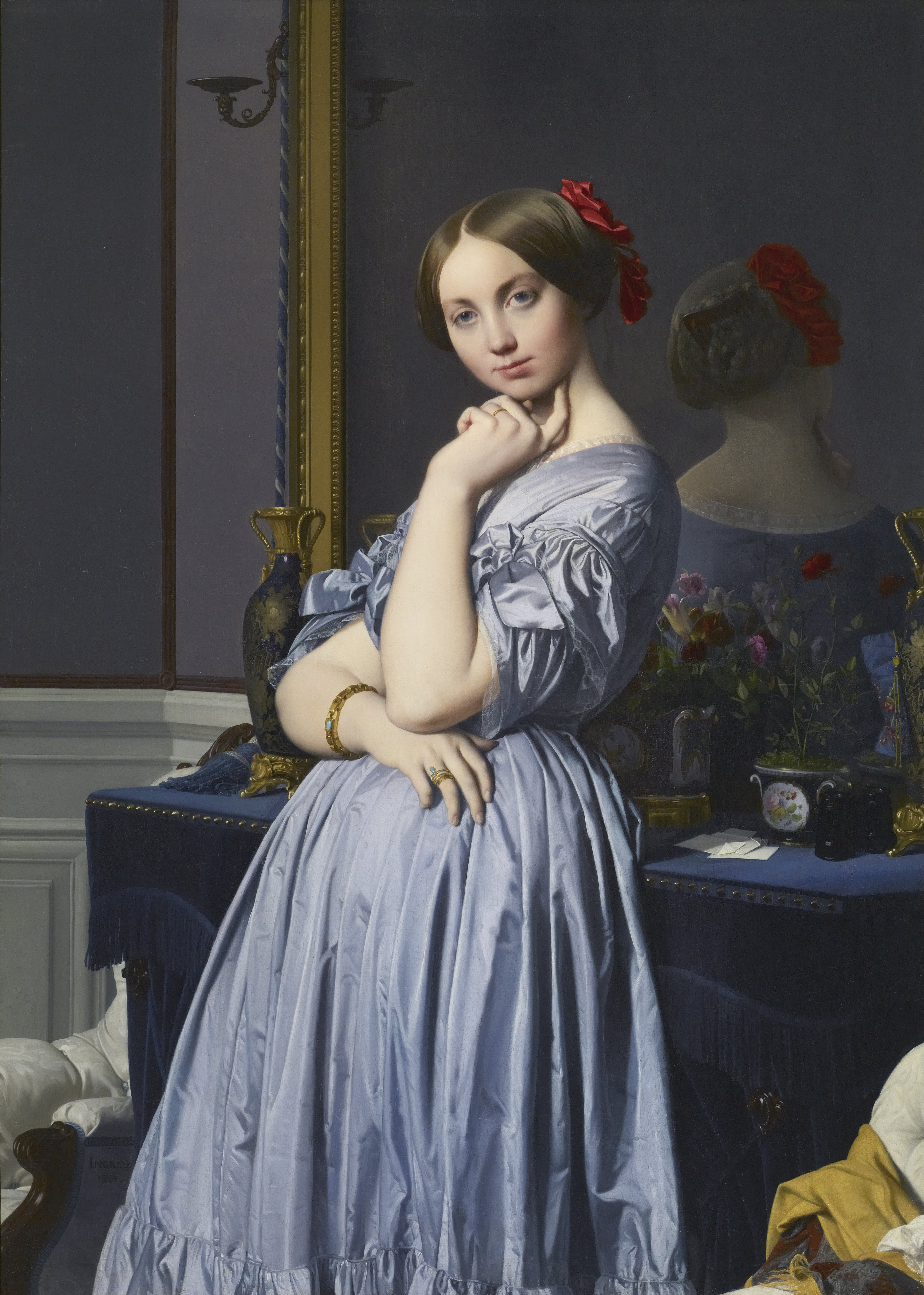
Jean-Auguste-Dominique Ingres – Portrait Of Countess D’Haussonville; Here we have a perfect rendering of Form without any visible Brushstrokes. Even though he used colors, they are highly idealized and don´t represent how we see in real life.
Now let´s look at the more “incomprehensible” stuff, the switch in mindset to see like a painter.
#3: Vision
As already mentioned, the sense of vision is very much neglected with the average person. Other senses are more pragmatic. What we are usually concerned with when going outside is the weather(Is it warm or cold? Is it raining?). Who cares about the mosaic of shapes and colors on the retina of the eye? As painters we need to take these mental ideas and convert them to something tangible, namely the shapes and colors hitting the retina of our eyes. Light hits our eyes and creates a 2-dimensional image. The canvas works the same way. Even Harold Speed says that teaching people to SEE should be GENERAL education. How can we expect to design or create something new from imagination, when we can´t even paint what we see?
#1: Flat Colors
People´s ideas of colors of objects are different from what we see from our visual perception. For example, if we think about an apple, we think of the outline of the apple and it being red. Maybe you might even shade it with some “Form”. But the truth is, from a visual standpoint, the apple looks totally different. See below, how the “real” apple is simplified and can be broken down into a mosaic of flat color patches. Instead of Form, all we have are Patterns of Colors. The Forms that we can feel with the sense of touch always stays the same, while appearance of objects always change in our Vision. What do I mean by that? If you look around you, depending on the angle you look at things, they always appear to look different. The patterns of colors on your retina change all the time. When thinking with that mindset, it actually doesn´t matter what you paint. Be it drapery, the human figure, landscapes, still lives or architecture. In the end, everything is just a bunch of “color patches” on the canvas that is caused by a certain light condition. You can paint anything that you want. Instead of having to memorize all the forms in the “Form Mindset”, now you can just paint what you see. For the same reason, it also doesn´t make sense to memorize color formulas, like how to paint a certain skin tone, because we perceive them differently all the time depending on the light and skin material behaviour.

Two apple simplified into into simple shapes. See how the colors are changed dynamically because of the light situation.
As you can see, we hardly recognize the apple as an apple anymore. For the Non-Painter, this is fairly incomprehensible, because it doesn´t represent or suggests any subject matter. Only when completed as the representation of things and with the association with other senses, can it be fully understood(i. e. delicious looking apple). As an artist, our goal in the end is to convey those other associations through the visual aspect of the painting. Let´s look at another example. Looking at an image upside-down will reset our affinity to see “things” and instead we just see a bunch of colors, before we start to try to identify the “objects” again. In painting, you need to be able to look at things just like this bunch of colors instead of “things”.

Looking at the landscape upside-down you can more easily see the variety of color patterns.
#2: Direct Painting
Around 1600, Dutch painter Frans Hals and Spanish painter Diego Velázquez incorporated more and more of these visual aspects into their paintings. The result is a more truthful representation of what we SEE. We can already see that they tried to combine the idea of Form with the visual representation of things seen. Study them, because Sargent, Sorolla and Zorn were highly influenced by them.
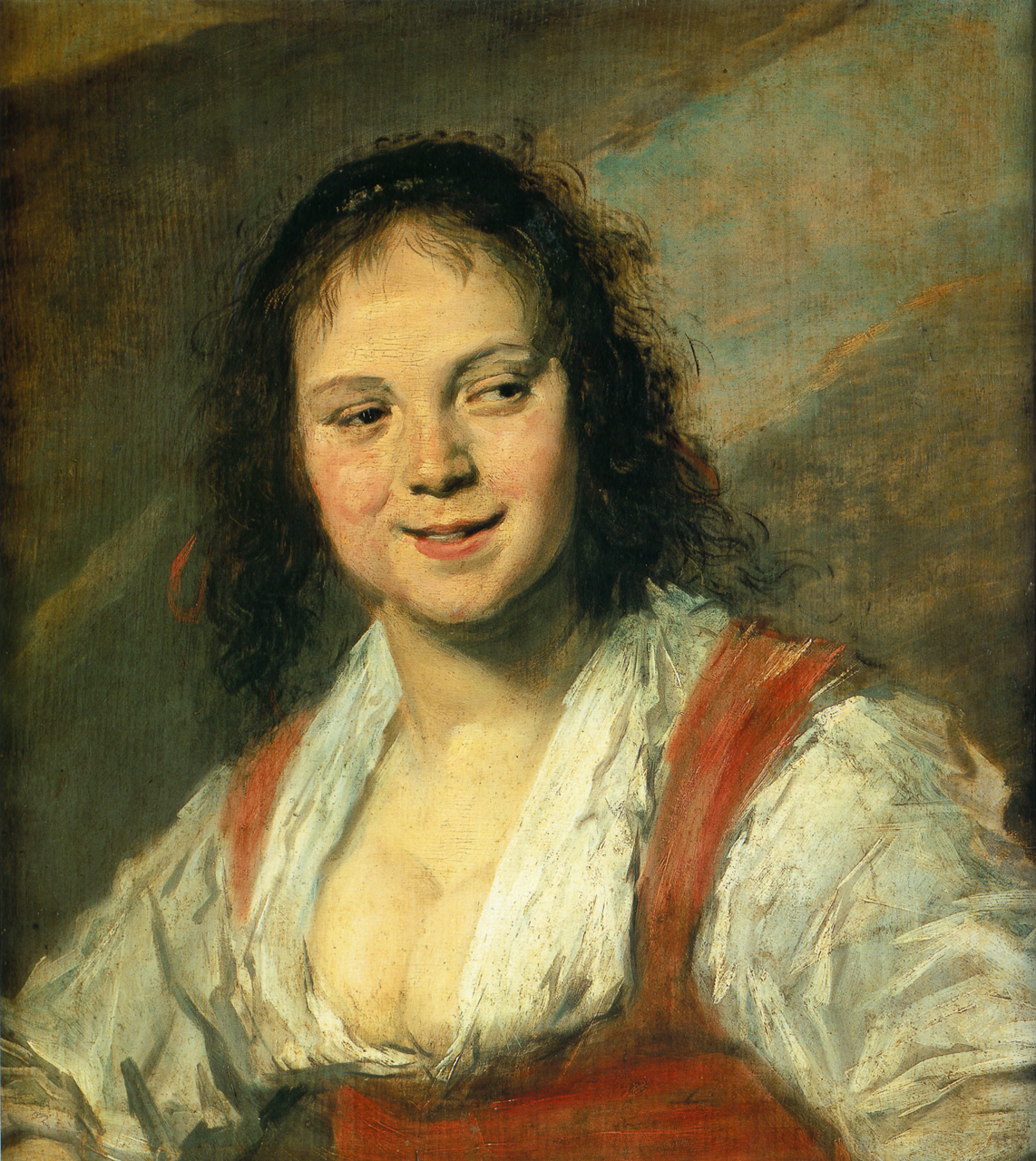
Frans Hals – Gypsy Girl; Frans Hals was one of the first to use Direct Painting in his works. Notice the visible brushstrokes in this painting. Beginnings in the Dutch Republic.
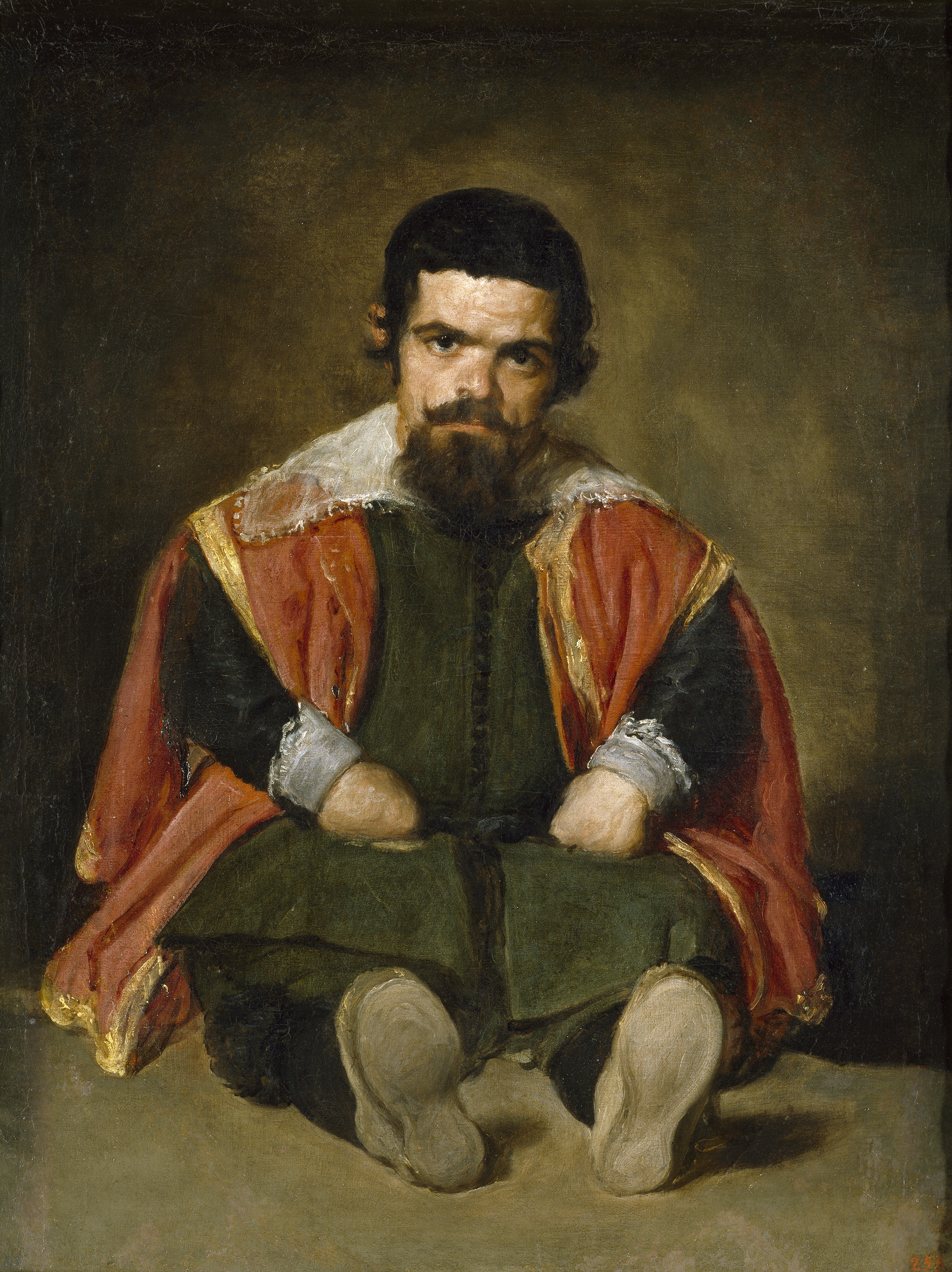
Diego Velázquez – Portrait of Sebastián de Morra; Beginnings of Direct Painting in Spain.
#3: Impressionism
The history of western art developed from a plain painting system and culminated in the Impressionist Movement. Impressionistic painting is a revolt against those formulas of rendering paintings(which is a lot concerned with technical knowledge). Instead, by painting what we SEE, we can start to paint whatever we want. Impressionism takes everything a bit further and ignores every sense of form and just notices the effect of light on the retina as it is. That means you can just paint what you SEE as shapes of colors without having to memorize anatomy or lighting formulas. In the world of Impressionism, light situations change all the time. Everything we SEE as shapes on the retina changes ALL THE TIME. This gives us freedom in painting whatever we want. The painting style of earlier centuries were restricted due to their skill-cap of having to memorize every bit of anatomy and relied upon remembering coloring “formulas”. These “coloring formulas” are very apparent in beginning painters today. If YOU want to improve, you need to start a personal revolt against your current “form” painting system and start employ a radical impressionistic mindset(and combine these two later; see #4). Start by going for a walk and see how the color shapes on your retina changes all the time. And how everything you see consists of ever-changing shapes. This is the specialty of the new “Shape Mindset” and which will go. against any “color and rendering” systems. Instead of carefully painted finished images without any visible brushstrokes, the Impressionist Painting style is free in expression, bold, and captures a sense of life and nature similar to the way we see. We see the totality of the visual impression. Objects, backgrounds and atmosphere become one. This painting style let´s us become free from the restrictions of painting systems and boundaries as well as careful planning. People might say that the drawing skills in these paintings might look “horrendous”. In fact, Impressionists were often criticized for not being able to draw and for producing “unfinished paintings”, but this is not the focus in impressionistic paintings. From a pure vision standpoint, these paintings were a pure work of art. Just look at the selection of colors and the representation of the light effects. This was never done before it´s time. Monet famously used a series of Haystack paintings to show the effect of light at various times of day, seasons and weather types. Here are just some examples of these:
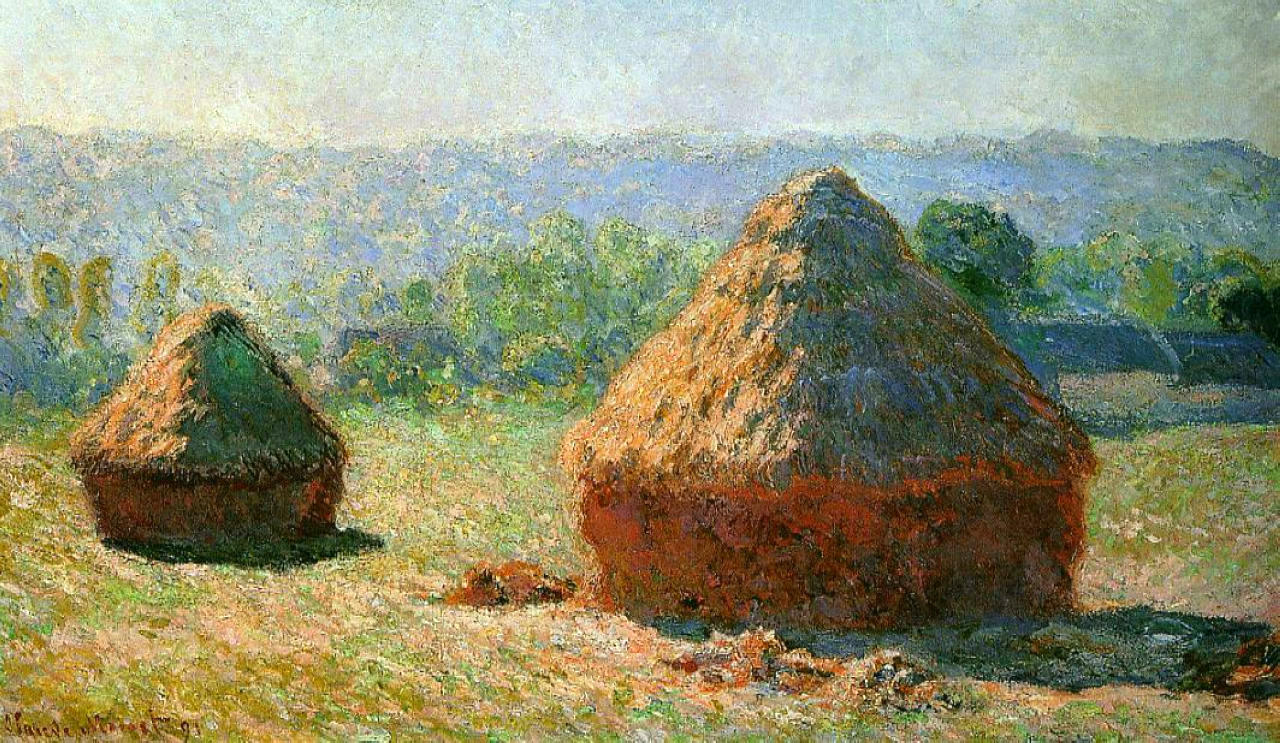
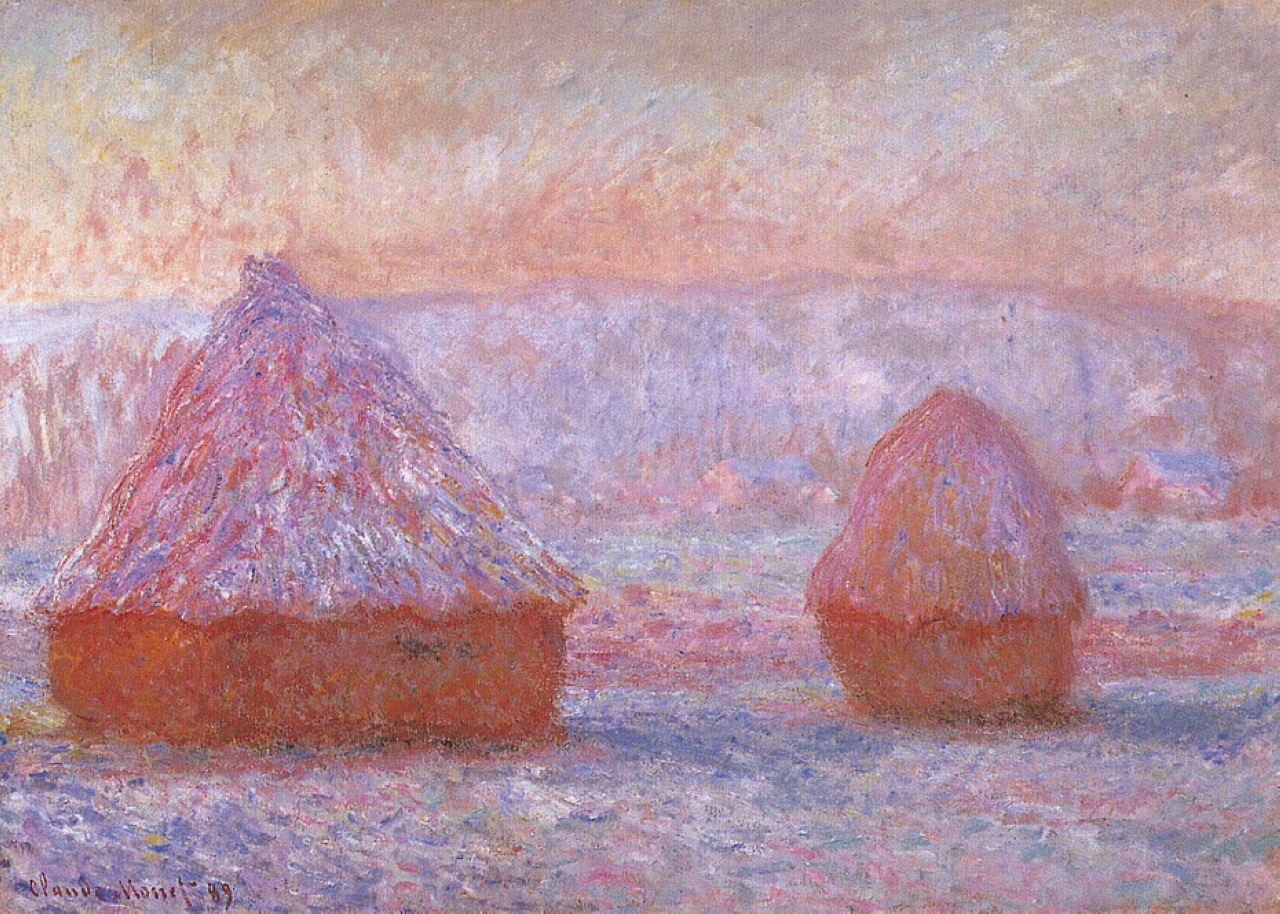
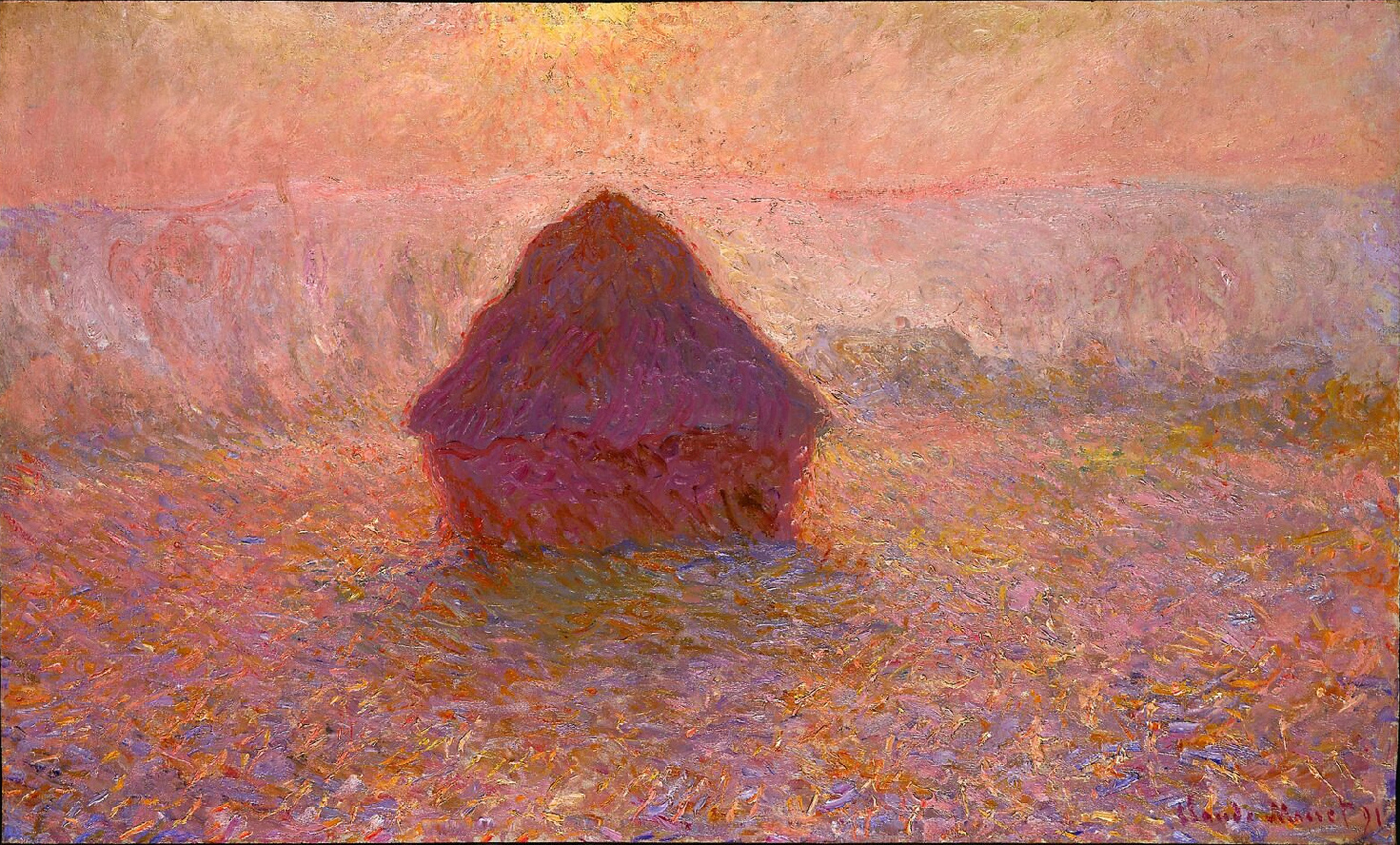
Do you see, how there is freedom in painting whatever you see? Without having to rely on knowledge of Forms? Impressionists focuses on light and color. By painting what you SEE, you get a more accurate representation of the world and how color and light reacts in a truthful way. Let´s look at some of the advantages and disadvantages of this mindset: Great paintings can be deemed as “unfinished”. But by painting in all the details and by rendering endlessly we might lose some of the expression and emotional quality of the painting. To the Non-Painter, good paintings are only finished or representative paintings, because they are not looking for the visual quality of the painting, but for the descriptive nature of the work of art. However for the Painter, a painting is finished when the emotional idea has been realised, not when the painting has enough details to represent everything. That is not to say, that we should paint in a completely 2-dimensional and abstract way. Impressionism loses the quality of Line Drawing, which makes for the majority of the expression. Combining both will give you a complete representation. In the end, we need to have a fine balance between the Abstract 2-dimensional “Shape Mindset” and the 3- dimensional concept of Form. The Radical Mindset of Impressionists is not very practical, due to the “Loose Drawing” and “Unfinished Painting” quality. However, for creativity and education reason, studying in this manner is indispensable and vital for your development as a painter. To put this new mindset to use in your -final paintings-, combine both Touch and Vision into one whole. Some of the greatest paintings are done by combining both, which is what we will discuss in the next section.
#4: Combining Touch and Vision

The extrema of Impressionism removes much of the beauty of line. And when we want to retrieve that, we need to start and combine both views(Form and Vision) into one full expression. If you employed Vision into your workflow, you should be able to handle Values and Colors pretty well. This is when you start to combine Form and Vision and make your work full of expression. Let´s look at Sorolla. He was well-known for his use of colors, but still employs form into his figures. In his studies, he would study both separately. Here is a study of Form:
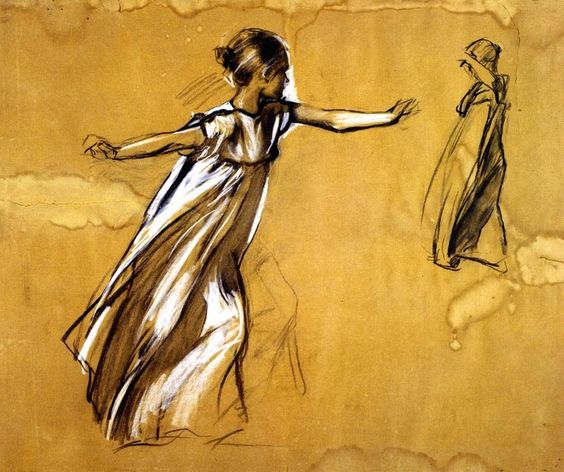
Joaquín Sorolla y Bastida – A preliminary study, that focuses on the study of 3-dimensional Forms.
Here he completely ignores Form and only studies how the Pattern of Colors relate in a 2-dimensional way:
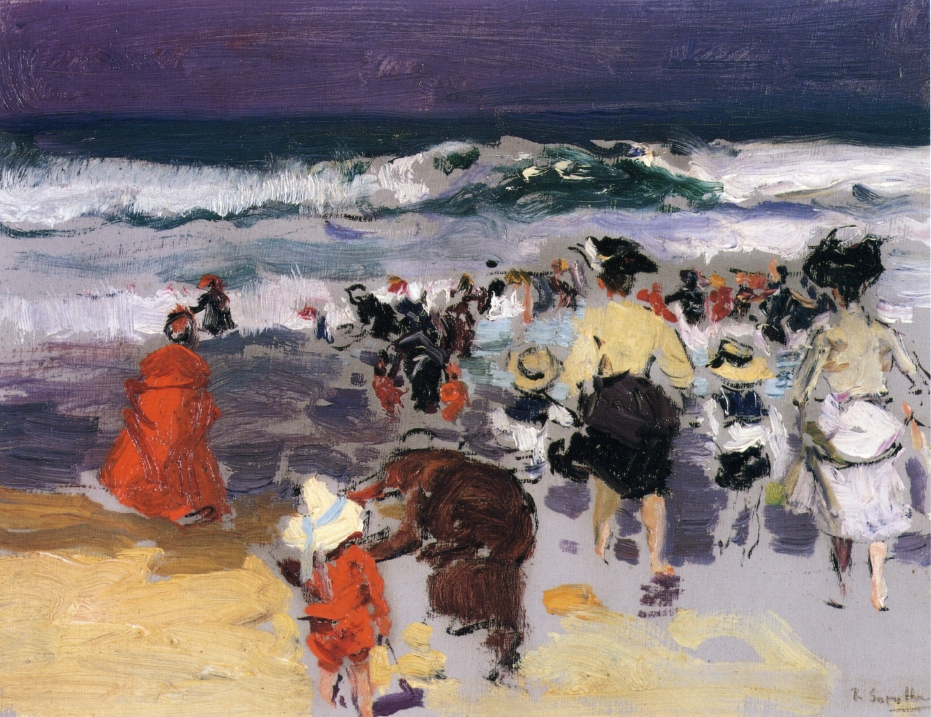
Joaquín Sorolla y Bastida – In this compositional color study, only shapes are employed to study the 2-dimensional color pattern.
We can see how Sorolla stays with 2D Shapes in his color compositions and also makes form studies with charcoal. In his final paintings he combines both Form and Shapes for a full expression. Now Form isn´t only defined by arbitrary values and colors, but they relate to the truthful lighting of the scene. The secret here is to still think about 2D Shapes and it´s design while rendering the 3D Form.
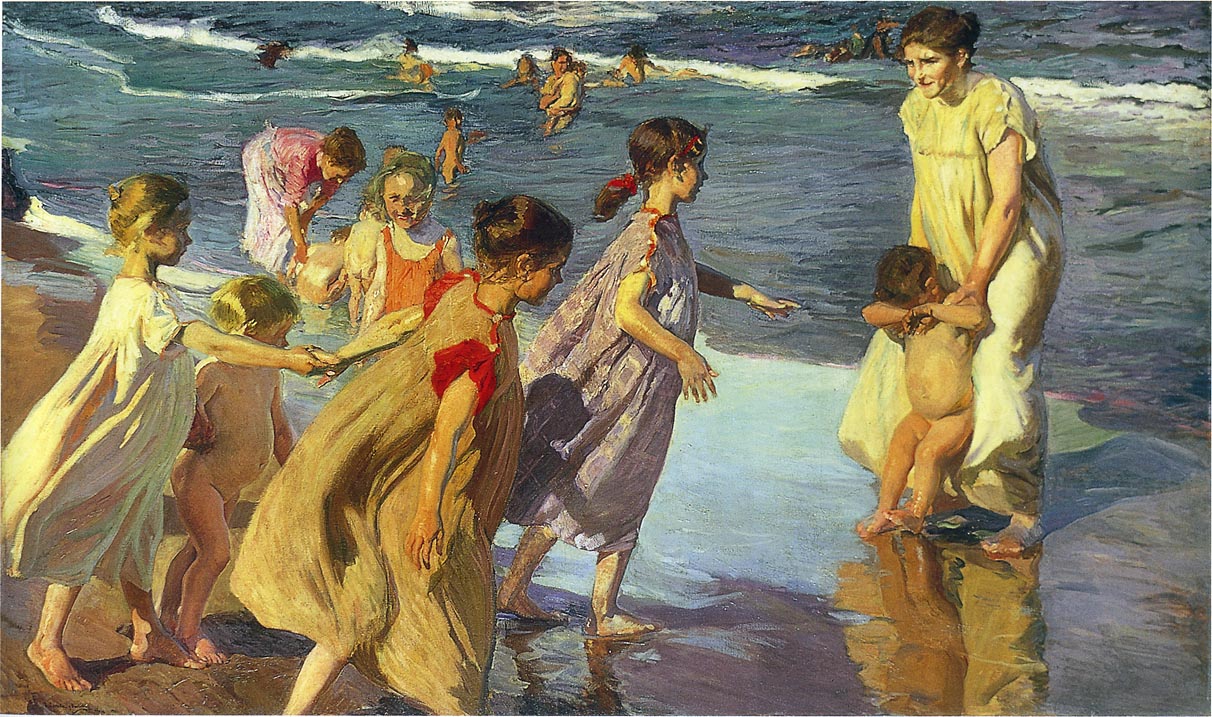
Joaquín Sorolla y Bastida – Summer
The same procedure can be seen in Sargent´s and Zorn´s work. To be able to combine both, you need to be able to accurately paint the shape and think about the plane and form at the same time. Another quick note: If we render forms continually or break down shapes further and further, then the end result will look the same: A realistic representation of what we see. It is really our choice to balance out the way we handle forms and shapes. Here is another quick example to show you how styles can change depending on YOUR choice of handling. Isaac Levitan was a Russian landscape painter. Even though Levitan was a painter of Realism, most of his later paintings display his handling of color and light and his influence by Impressionism. Notice the truthful representation of the light effect.
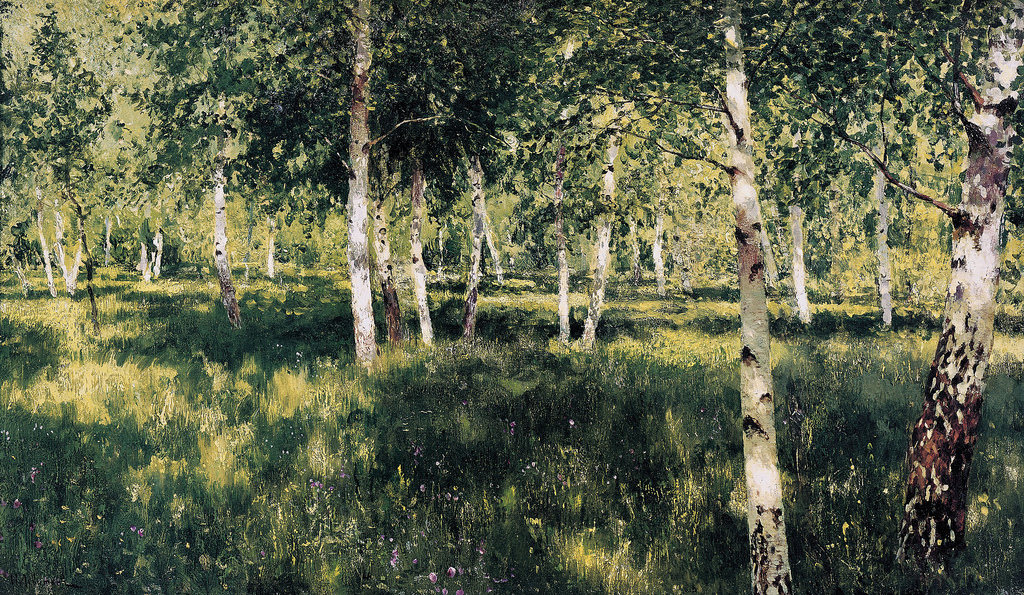
Isaac Levitan – Birch Forest; In Levitan´s paintings, form, detail, light and color become one.
Resources
Conclusion
Now you should be able to study countless of Master Artists for their use of form and shapes. Once you understand it fully you can start to play around with these instruments, develop your own artistic style and have a professional approach to your own paintings. Both touch and vision are important for a full expression of a painting. However, vision is often neglected or not developed due to human evolution. Before you become proficient at painting, you need to train your vision and start to see things as 2-dimensional color shapes on our retina. Only after you have become proficient at touch and vision separately, can you start to combine both for a full expression of your painting. In the end, your task is to SEE both form and shape.